Dear followers (and first timers) of Abkhaziadiary!
This is the 110th and the last (for a while) post in Abkhaziadiary. I hope you have enjoyed reading my complex observations and feelings. I give a break since I will not be in Abkhazia for a while. I may have information that I wish to share but I will very likely give this in research.bazala.net website. We are still working on the Problems and Perceptions of the Youth Survey. (Mramza Chikirba, political scientist- researcher is leading the field work).
We have completed another short term research project of an international NGO- photos from the field work will be available soon in the abkhazidiary photoblog. (My computer crashed down so gotto wait).
The text message for Abkhazia works only for true belivers :) Upto now only one super friend managed to send me a text message (the first one). After now- my Abkhaz line is closed till I will be back so not to worry.
*Abkhazia has changed a lot since my first visit in December 2006. It has recovered a lot, now you see more colorful buildings and less bullet halls in the apartments and houses.
*Social life has turned very active, I missed a lot of great concerts in the last few months; however I managed to watch -for the first time- a 3D movie- AVATAR- in the philharmonic hall. It was fun and extraordinary.
*Political life is in constant mood of change, Abkhazia is trying to become multi-polar in external politics and has succeeded a lot in this by the recognition of Nicaragua, Venezuela, Nauru after Russia. Now we have a lot of internet sites in Spanish- and Spanish teachers and speakers of Abkhaz-Adyghe origin should use this to repatriate since there is need for them.
*The Committee of Repatriation has a new head, which means there will be changes in politics and practice of return migration in the next period.
*Education system still has many problems but at least everybody is aware and talking about these problems.
*Health Care Institutions are all under renovation. Which makes the sick people feel more comfortable about local treatment.
*International Abkhaz Passports are being distributed to students and soon they will be distributed to all citizens.
*The new term at the university have started and the youth want a change in the system to a western style education classification (instead of aspirantura, candidatski, doktorantura they wish magistratura and doktorantura).
*Now you can buy cheap and quality products of all kinds in Abkhazia. However, local agricultural production still needs promotion and infrastructure (roads) to decrease the food prices in the market.
Maybe there a lot more things to say and maybe I will edit this posts in the next few weeks but for a while, just for a while use other sources of information to learn about Abkhazia.
I will be back one day.
Showing posts with label Abkhazia. Show all posts
Showing posts with label Abkhazia. Show all posts
Sunday, September 19, 2010
Friday, July 16, 2010
How can you watch the clear sky and the stars as you see the lightening?
Yesterday I was in the balcony lying on the floor and watching the stars wishing for a falling star... I really needto catch one these days/// :( Anyway, the sky was clear but there was a kind of light. I thought it was someone with a porch lite. However, it was not. It was the lightening because I heard the thunder in a few moments. And one more time and one more time. How can you watch the clear sky and the stars as you see the lightening? In Abkhazia it is so possible. Yesterday morning, I was in Gulrypsh and it was raining. I came to Sukhum and there was no rain. It was sunny. Than a few hours later it started to rain in Sukhum. I went to Gulrypsh and it was sunny there... Climate is really interesting in Abkhazia.

Wednesday, June 23, 2010
31st of May-Official Memorial Day of the Exile
On the 31st of May everything started as usual. People come together in the area where by September the memorial statue that weighs 3 tons is going to be installed. (I must have a picture of a smaller version somewhere and should remember to upload it in my album!)
The first flowers were put by the committee of repatriation which used to include a group of repatriants till this year. They were only employees of the committee. The repatriants except a bunch of 6 had protested the event since the government had not supported their event ten days ago. However, it must be noted that they did not ban the event as some argue. They just said they want the event to take place on the official memorial day for Abkhazia- 31st.
Anyway, the Presidential Administration followed the Repatriants, followed by groups of ministries, city administration, military representatives, police, students, war veterans. The most scenic moments of the event were the prays of the Imam and Bishop (and priests from the Abkhaz patriarchy) in front of the memorial.
The people scattered to their work or lives just after the Bishop`s pray by the memorial. However, the youth committee had other plans. With the tour ship that is now working between Gagra and Sochi transporting tourists, was loaded with young people and a little more crowded group of repatirants (12) they throw flowers to the sea.
And that was all...
The first flowers were put by the committee of repatriation which used to include a group of repatriants till this year. They were only employees of the committee. The repatriants except a bunch of 6 had protested the event since the government had not supported their event ten days ago. However, it must be noted that they did not ban the event as some argue. They just said they want the event to take place on the official memorial day for Abkhazia- 31st.
Anyway, the Presidential Administration followed the Repatriants, followed by groups of ministries, city administration, military representatives, police, students, war veterans. The most scenic moments of the event were the prays of the Imam and Bishop (and priests from the Abkhaz patriarchy) in front of the memorial.
 |
| From 2010-05-31 Memorial Day and Sukhum from the Sea |
 |
| From 2010-05-31 Memorial Day and Sukhum from the Sea |
The people scattered to their work or lives just after the Bishop`s pray by the memorial. However, the youth committee had other plans. With the tour ship that is now working between Gagra and Sochi transporting tourists, was loaded with young people and a little more crowded group of repatirants (12) they throw flowers to the sea.
 |
| From 2010-05-31 Memorial Day and Sukhum from the Sea |
And that was all...
Thursday, June 10, 2010
Kindergarden Graduation
When I was invited to the graduation ceremony of a repatirant girl, Yasmin, I was very excited. It was amazing to see all those little ones singing songs in Abkhazian, reading poems, playing small dramas, dancing all kinds of dances, and being so enthusiastic about life...
 |
| From Kindergarden Graduation |
Sunday, June 6, 2010
Visiting the Olympic Sports Center in Eshera
I decided to do something different on this nice silent sunday morning and we visited the Olympic Sports Center in Eshera.
It must have been amazing before the war. Wish there would be resources to renovate it. Eshera is at the entrance of Sukhum and the war was harsh in this area... Now we can only sense and listen to stories of what had been here... If it would have been renovated, it would have changed the future of many children, giving them opportunity to become good sportsmen, and ofcourse good people...
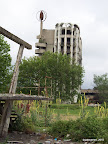 |
| From Olympic Sport Center |
It must have been amazing before the war. Wish there would be resources to renovate it. Eshera is at the entrance of Sukhum and the war was harsh in this area... Now we can only sense and listen to stories of what had been here... If it would have been renovated, it would have changed the future of many children, giving them opportunity to become good sportsmen, and ofcourse good people...
 |
| From Olympic Sport Center |
Saturday, May 22, 2010
That day
So that day has come... 21st of may... The memorial day for the exile of Caucasians from their homeland. Some people oppose to the use of this term "exile". They say it was a chosen migration. They say the Muslims migrated. They say people went for better harvest. Some say the elite sold or convinced or took their people... Some say that it was not an exile but a deportation with agreement of parties...  Some argue they had choices... Whatever they say, today the day that marks the end of the Russio-Caucasus wars, that is 21st of May, which was a day of celebration for Tsarist Russia of victory in the Caucasus, is a day of remembrance for the people who died in this event of the 19th century.
The family histories, and records of official archives, say that people were put on ships. The ships were overloaded, and many sank on the way. Many people died of hunger and diseases on the ships and after arrival.
The territories shown to migrants were not suitable for settlement, many more died in the next months.
The last couple of decades, the remembrance day, 21st of may, has been the most important event of all political-cultural organizations of the Diaspora. Before the dissolution of the Soviet Union, the memorial day was also a big event in Abkhazia. Last year they showed on TV how people travel from all regions, in buses, and how crowded it was. The president of the time -Bagrat Shinkuba, the writer of the famous book THE LAST OF THE DEPORTED- was making a speech about the exile.
Just yesterday, an early returnee was telling me how crowded it would be and how they would throw flowers with candles to the sea from a ship, and even on the most wavy day the flowers would float away to Black Sea...
Three years ago when I came, the event was just a flower putting ceremony on the morning of the 31st. It was very interesting to learn that, in Abkhazia, it was suggested during the war by president Ardzynba, that it should be on the 31st. The Adyghe brothers will do their ceremonies in their hometowns on the 21st, and they would all come to Abkhazia and on the 31st it would be a bigger ceremony all together. Besides, Abkhaz were exiled 13 years later than Adyghe. So it was decided and memorial was on the 31st. The first year I was in Abkhazia, I wanted to memorize Shish Nanni and read it, but they told me nobody makes here such events.
The second year, Naala did organized one. All alone, I mean without any government or institutional support, just with her friends, and with an economic support by Aquafon, she arranged the first memorial day. It was sometime in June, but it did not matter. A group of people came. We made the tailors sew 20 red-green-white akhtarphas, like the Abkhaz flag, within 4 hours! Lana Copua was reading a poem, Nona and a few others were singing Shish Nanni. Some people made speeches, Bagrat Shinkuba's grandson Lavan was there; Hayri Kutarba was there. Kamma had a big Abkhaz flag. Later when we went to drink something at than new Apra Cafe, from all the tables they sent us champaignes since we were talking in Abkhaz (trying) and we had aktharphas and flags. At the event, we were promised to be supported by the Repatraition Committee in the coming year.
The second year, ofcourse, they were hesitant to keep their promises. But in the end, we organized with Lana Agyrba an exhibition called Abkhazia and Diaspora: Understanding each other... We also shot a short symbolic movie on exile and return... The event was big. More than a thousand people and both TVs came to shoot. We had the sound system, screen, the first and only concert of the chorus apsadgyl (homeland) with Ivana Shamba, we had the white aktarphas (again 20), we had the torches prepared by Syndukh Ergun and the youth, again Lana Copua reading a poem, and many others... The event was very spectecular... We even made a protest for not building of a statue in the memorial. The events were supported by Repatriation Committee, Committee of Sports and Youth, and even Ministery for Foreign Affairs.
This year Ozlem and Naala, organized again with the Committee of Sports and Youth but in the last minute, the government opposed the ceremony to be made on the 21st. The SMS were sent by both mobile phone companies, and a few hours later messages came saying it will be on the 31st. However, without any state representative, without any TVs to record, without any sound system, without half of the planned speakers, the youth did it again. There were only about 100 people to watch. But they were there all from heart. That was good. There were new aktarphas, mainly black but also green and white. I do not know the number since I was not in the event organization. (I had been away for a while, and the last two weeks I have a terrible throat infection which keeps me back from taking place in aything!) Naala was in a traditional dress so was Dijin who was playing the flute (an Adyghe from Turkey who lived in Nalchik for over 15 years). Ivan Bakij, our famous singer who returned from Jordan was wearing an akhtarpha over his shoulders as he played his guitar. Taha Gecba was dressed all in black, as he sang songs in Adyghe. Little Ozan was again reading a poem in Abkhazian. There were short speeches by some attendees. The youth walked with torches again and made the nart fire! No matter what people say. No matter what people fear. No matter how, no matter what, no matter why... If some people believe in what they do: the result is unforgettable... This is how that day was in Abkhazia... For those who wish to know... (For those who wish to see more photos press here)
Oh and I forgot to tell, there was the Yearly Dance Contest Adyzh and the view was spectecular as they walked through the city on that day...
 Some argue they had choices... Whatever they say, today the day that marks the end of the Russio-Caucasus wars, that is 21st of May, which was a day of celebration for Tsarist Russia of victory in the Caucasus, is a day of remembrance for the people who died in this event of the 19th century.
The family histories, and records of official archives, say that people were put on ships. The ships were overloaded, and many sank on the way. Many people died of hunger and diseases on the ships and after arrival.

The territories shown to migrants were not suitable for settlement, many more died in the next months.
The last couple of decades, the remembrance day, 21st of may, has been the most important event of all political-cultural organizations of the Diaspora. Before the dissolution of the Soviet Union, the memorial day was also a big event in Abkhazia. Last year they showed on TV how people travel from all regions, in buses, and how crowded it was. The president of the time -Bagrat Shinkuba, the writer of the famous book THE LAST OF THE DEPORTED- was making a speech about the exile.

Just yesterday, an early returnee was telling me how crowded it would be and how they would throw flowers with candles to the sea from a ship, and even on the most wavy day the flowers would float away to Black Sea...
Three years ago when I came, the event was just a flower putting ceremony on the morning of the 31st. It was very interesting to learn that, in Abkhazia, it was suggested during the war by president Ardzynba, that it should be on the 31st. The Adyghe brothers will do their ceremonies in their hometowns on the 21st, and they would all come to Abkhazia and on the 31st it would be a bigger ceremony all together. Besides, Abkhaz were exiled 13 years later than Adyghe. So it was decided and memorial was on the 31st. The first year I was in Abkhazia, I wanted to memorize Shish Nanni and read it, but they told me nobody makes here such events.
The second year, Naala did organized one. All alone, I mean without any government or institutional support, just with her friends, and with an economic support by Aquafon, she arranged the first memorial day. It was sometime in June, but it did not matter. A group of people came. We made the tailors sew 20 red-green-white akhtarphas, like the Abkhaz flag, within 4 hours! Lana Copua was reading a poem, Nona and a few others were singing Shish Nanni. Some people made speeches, Bagrat Shinkuba's grandson Lavan was there; Hayri Kutarba was there. Kamma had a big Abkhaz flag. Later when we went to drink something at than new Apra Cafe, from all the tables they sent us champaignes since we were talking in Abkhaz (trying) and we had aktharphas and flags. At the event, we were promised to be supported by the Repatraition Committee in the coming year.

The second year, ofcourse, they were hesitant to keep their promises. But in the end, we organized with Lana Agyrba an exhibition called Abkhazia and Diaspora: Understanding each other... We also shot a short symbolic movie on exile and return... The event was big. More than a thousand people and both TVs came to shoot. We had the sound system, screen, the first and only concert of the chorus apsadgyl (homeland) with Ivana Shamba, we had the white aktarphas (again 20), we had the torches prepared by Syndukh Ergun and the youth, again Lana Copua reading a poem, and many others... The event was very spectecular... We even made a protest for not building of a statue in the memorial. The events were supported by Repatriation Committee, Committee of Sports and Youth, and even Ministery for Foreign Affairs.
This year Ozlem and Naala, organized again with the Committee of Sports and Youth but in the last minute, the government opposed the ceremony to be made on the 21st. The SMS were sent by both mobile phone companies, and a few hours later messages came saying it will be on the 31st. However, without any state representative, without any TVs to record, without any sound system, without half of the planned speakers, the youth did it again. There were only about 100 people to watch. But they were there all from heart. That was good. There were new aktarphas, mainly black but also green and white. I do not know the number since I was not in the event organization. (I had been away for a while, and the last two weeks I have a terrible throat infection which keeps me back from taking place in aything!) Naala was in a traditional dress so was Dijin who was playing the flute (an Adyghe from Turkey who lived in Nalchik for over 15 years). Ivan Bakij, our famous singer who returned from Jordan was wearing an akhtarpha over his shoulders as he played his guitar. Taha Gecba was dressed all in black, as he sang songs in Adyghe. Little Ozan was again reading a poem in Abkhazian. There were short speeches by some attendees. The youth walked with torches again and made the nart fire! No matter what people say. No matter what people fear. No matter how, no matter what, no matter why... If some people believe in what they do: the result is unforgettable... This is how that day was in Abkhazia... For those who wish to know... (For those who wish to see more photos press here)

Oh and I forgot to tell, there was the Yearly Dance Contest Adyzh and the view was spectecular as they walked through the city on that day...
 |
| From dance |
Wednesday, May 19, 2010
Fieldwork in Abkhazia (2)
While organizing the fieldwork I had many problems to deal with. Since I do not have a good assistant who can organize the people and transport. At the NGO and in the first project I had Martha to help me with everything, some of you who read this blog frequently will remember she recently got married and is living happily in Moscow for the time being. I am looking for her return not that because she will be a great partner in research but also she is a great friend, making your day all the time with her comforting smile. Anyway, when she was in Abkhazia, she comfortably organized people and transport and all I had to tell was when and where to. I realized how much work she had to do when I had to call and recall all my team to fix a suitable group for a region. What can be so hard about is, I want to take all team members to places they have never been. Abkhazia is a small country but local people who are not involved in works that force them to travel around, do not visit any place except for weddings or funerals. And social events means responsibilities as I mentioned before. So many of them do not even realize the historical remains or natural beatuies they pass by. When we are in the field, I want to see these things and I want the team to see them. It should be something more than work, more than running from one respondent to another, it should be something they enjoy doing. I try to take them to places they have never been which is a hell of a job since they are not always available for work and I dont want them to loose that chance to see there.
I want to make sure fieldwork gives them a lot of memories, unforgettable ones, some laugh, some good taste of food if possible. In our first fieldwork, once we were trying to finish a village and it was after lunch time and all our food was finished and everybody was very hungry. I had thought we would be in the city by than and be in a restaurant so I had food enough only for breakfast. From one of the houses that we were making an interview, a man came with fresh home made cheese, freshly baked cheesebread (achoaf) and acika (peppersalt). We wanted to reject it but at the same time very much wanted to eat it. So I was -as traditions required- rejecting nicely. And the host just put it on the seat of the car. When he saw we were too many, he called his wife to bring more and we were presented some more bread. When we were eating it I just thought this is the most delicious thing I have ever eaten. That taste has been unforgettable to all the team, just like it has been to me. And I know that when this story is retold in the field `it is time to eat something!`.
Since now I know the conditions, I make orders on the night before so that we will have enough food in the rural areas. In many parts of Abkhazia, you wont have a chance to find a restaurant and even a small village shop to buy a drink or bread. Villages are self sustained in most senses and only some durables are sold in the village shops (if there is any). Many people go for shopping once a month to the cities or town centres, or they ask for relatives working in the city to bring in things when they come to the village in the weekends. Still, in all the houses you will be offered what ever they have, for sure a cup of coffee (not instant one), very likely a piece of homemade cheese, homegrown hazelnuts and/or fruits, some chocolate and ofcourse homemade wine or chacha (double destilled vodka with about 70 % alcohol). I leave the choice to eat or drink to the team, except alcohol. Since I know it will never end, if they start traditional drink and pray ceremony and I would not like my interviewers to be drunk. So they are strictly forbidden. However, once during the beneficiary assessment, we were in a village where each house is located far from one another. I left the male interviewer alone and asked him to go to three houses nearby (still he had to walk 20 minutes) and and wait for our return in the last one. Though we had the car, we had to travel 40 minutes drive to reach one of the houses. And by the time we returned to pick him, he was in the last house for over an hour and the phones were not wroking in this village. So they made him drink (and he had no other option) so he was all drunk and complaining to me saying it was my fault to leave him there, though I understood and was not angry to him. Somethings are unavoidable.
The climate in Abkhazia, is also a problem for fieldworkers. You may start the day with a warm sun and end soaked up in heavy rain. Many times I had to build up a system to dry wet questionnaires at the back of the car. I wished to buy special trasnparent pancho rain coats for the team but never found something as I wished. Still after many times being soaked in the field, or freezing because of sudden weather change, I have to remind the team to take umbrellas and coats with them in all seasons. Besides, the young people in Abkhazia are really caring for how they look and sometimes I laugh at their choices of clothing for rural fieldwork. They wear white shoes, and ofcourse stop many times to clean them from the mud they had to step on while entering a house or manure they stepped on just by mistake. Short skirts are also funny since they do not have the chance to move comfortably though clothing is not a problem for village elderly as I had seen in rural Turkey. There girls should really care what they wear.
Security is not an issue in fieldwork in Abkhazia, though I care very much about it. What I mean is, we have never been treated badly or threatened in anyhow. OfcourseI do not count a drunk elderly wishing to have a photo with one of the girls hugging her, or a mentally ill kid following us all through the village.
I am sure I have a lot more to say about fieldwork, but I guess all this will be enough to understand how we do it in Abkhazia. If you are interested in knowing about ethical issues or more about our projects you can visit our website.
It is time for abkhaziadiary to be back to daily issues.
I want to make sure fieldwork gives them a lot of memories, unforgettable ones, some laugh, some good taste of food if possible. In our first fieldwork, once we were trying to finish a village and it was after lunch time and all our food was finished and everybody was very hungry. I had thought we would be in the city by than and be in a restaurant so I had food enough only for breakfast. From one of the houses that we were making an interview, a man came with fresh home made cheese, freshly baked cheesebread (achoaf) and acika (peppersalt). We wanted to reject it but at the same time very much wanted to eat it. So I was -as traditions required- rejecting nicely. And the host just put it on the seat of the car. When he saw we were too many, he called his wife to bring more and we were presented some more bread. When we were eating it I just thought this is the most delicious thing I have ever eaten. That taste has been unforgettable to all the team, just like it has been to me. And I know that when this story is retold in the field `it is time to eat something!`.
Since now I know the conditions, I make orders on the night before so that we will have enough food in the rural areas. In many parts of Abkhazia, you wont have a chance to find a restaurant and even a small village shop to buy a drink or bread. Villages are self sustained in most senses and only some durables are sold in the village shops (if there is any). Many people go for shopping once a month to the cities or town centres, or they ask for relatives working in the city to bring in things when they come to the village in the weekends. Still, in all the houses you will be offered what ever they have, for sure a cup of coffee (not instant one), very likely a piece of homemade cheese, homegrown hazelnuts and/or fruits, some chocolate and ofcourse homemade wine or chacha (double destilled vodka with about 70 % alcohol). I leave the choice to eat or drink to the team, except alcohol. Since I know it will never end, if they start traditional drink and pray ceremony and I would not like my interviewers to be drunk. So they are strictly forbidden. However, once during the beneficiary assessment, we were in a village where each house is located far from one another. I left the male interviewer alone and asked him to go to three houses nearby (still he had to walk 20 minutes) and and wait for our return in the last one. Though we had the car, we had to travel 40 minutes drive to reach one of the houses. And by the time we returned to pick him, he was in the last house for over an hour and the phones were not wroking in this village. So they made him drink (and he had no other option) so he was all drunk and complaining to me saying it was my fault to leave him there, though I understood and was not angry to him. Somethings are unavoidable.
The climate in Abkhazia, is also a problem for fieldworkers. You may start the day with a warm sun and end soaked up in heavy rain. Many times I had to build up a system to dry wet questionnaires at the back of the car. I wished to buy special trasnparent pancho rain coats for the team but never found something as I wished. Still after many times being soaked in the field, or freezing because of sudden weather change, I have to remind the team to take umbrellas and coats with them in all seasons. Besides, the young people in Abkhazia are really caring for how they look and sometimes I laugh at their choices of clothing for rural fieldwork. They wear white shoes, and ofcourse stop many times to clean them from the mud they had to step on while entering a house or manure they stepped on just by mistake. Short skirts are also funny since they do not have the chance to move comfortably though clothing is not a problem for village elderly as I had seen in rural Turkey. There girls should really care what they wear.
Security is not an issue in fieldwork in Abkhazia, though I care very much about it. What I mean is, we have never been treated badly or threatened in anyhow. OfcourseI do not count a drunk elderly wishing to have a photo with one of the girls hugging her, or a mentally ill kid following us all through the village.
I am sure I have a lot more to say about fieldwork, but I guess all this will be enough to understand how we do it in Abkhazia. If you are interested in knowing about ethical issues or more about our projects you can visit our website.
It is time for abkhaziadiary to be back to daily issues.
Friday, April 2, 2010
Fieldwork in Abkhazia
I applied to attend the meeting of the World Abkhaz-Abaza People's Assembly and said I will stay only for three days. At the airport, to see the joy and excitement of all those people, made me change my mind and I said, I will stay for a week together with the long term group. IT was a good decision. On the second and last day of the meeting, the had prepared a dinner. There I was walking around the tables and stopped by a table full of young people where joyful laughs was heard. I asked if anyone spoke English, and found out these people were the employees of the Ministry of Foreign Affairs of Abkhazia and all spoke English. One of them was very kind and friendly and asked me to the table. I explained to him that I was a sociologist and I would like to know his opinion and feelings about the event. (Than my Russian was really poor, I had no practice at all so I could only communicate with English speakers). This young boy, with glowing look in his eyes, told me how he was happy to see his people smiling, first time since the war. He told me how it was important that Abkhaz should return to their homeland... I said I was interested very much in the topic of return... Than my focus was more on Adygeya though... He said we need sociologists in Abkhazia and I said "will you help me if I come?". "Anything I can do..." Before I get up from that table (a few hours later) I promised him I will come back to stay and work on the topic of return migration/repatriation and any other topic that will be usefull for them. He on the other hand promised to help me with the language school at the university, accommodation, connections and job if I wish. He did everything he could as he promised. Wrote for me many letters, made many calls. Even one year after I came to Abkhazia, I told I will take the job he offered me a year ago, and I am still working in that centre... That boy was Maxim Gunjia, my first friend in Abkhazia, now the Minister of Foriegn Affairs, back than Vice Minister. A person who can be happy with a smile on his people's face. A person who can keep his promises. I was lucky to know him. Because thanks to him, I came to Abkhazia.
Anyway, working with migrant communities is always hard. In the case of Abkhazia, where people have "many others" and always feel the sense of "being the other" it was also hard. There has been moments that I wanted to give up on this topic and leave or live but away from the return migrants. However, there has been always people motivating me for the study of this topic, as many as there were people trying to de-motivate me.
Still my first country wide field work experience came with a position I took in an NGO in 2008. They asked me to do a survey and I said there is no sociology department and I need to educate young people so that what we do will be of good quality.
I organized 4 parallel trainings on field research methodology, with more than 40 people but only 15 of them could complete the training. The second group was 4 months later and just before I was starting the field work on the countrywide political participation and pre-election survey. Though I was a stranger in the field, and my team was unexperienced, we managed to do 1130 Questionnaire interviews- anonym (since the topic was sensitive) in all over Abkhazia. I used the voting regions (36 of them but the last three was combined into 1 since I did not have the full list) as stratas and the team did at least 30 interviews with random people in all stratas.
Anyway, less than a year after the first country wide survey, I established a firm for Social and Market Research (research.bazala.net) and realized a second wide survey- a beneficiary asessment about a development project. The third project came just after that, and we have just recently finished the fieldwork since we had many reasons to delay our work, including elections in December (and pre-election period) which was stressfull though our topic was non political; New Year Celebrations that last about a month (Christmas, New Year, Old New Year, New-old New year, etc....) when people were all drunk; the exams in the university, since many of the team members are students at the university; holiday after the exams, since we all needed a rest; than the loss of Abkhazia's first president Ardzynba...
However, it was hard to work due to these big events, in general it is hard to find the right day and time for interviewing in Abkhazia. Every friday, saturday and sunday are filled with marriages. Many days people are busy with funerals and memorial feasts of their extended families and friends' families. Weekdays, people go to the cities to do some jobs they need to, to shop, and even to work and come back "home" in the village for weekends.
Most team members are enrolled at the university in the weekdays. So we had to work in the weekends which was hard due to social responsibilities of possible respondents. But we managed, by leaving the city as early as 8-8.30 and arriving to the villages just when people are finishing their breakfasts and before they leave their houses.
To be continued
Anyway, working with migrant communities is always hard. In the case of Abkhazia, where people have "many others" and always feel the sense of "being the other" it was also hard. There has been moments that I wanted to give up on this topic and leave or live but away from the return migrants. However, there has been always people motivating me for the study of this topic, as many as there were people trying to de-motivate me.
Still my first country wide field work experience came with a position I took in an NGO in 2008. They asked me to do a survey and I said there is no sociology department and I need to educate young people so that what we do will be of good quality.
I organized 4 parallel trainings on field research methodology, with more than 40 people but only 15 of them could complete the training. The second group was 4 months later and just before I was starting the field work on the countrywide political participation and pre-election survey. Though I was a stranger in the field, and my team was unexperienced, we managed to do 1130 Questionnaire interviews- anonym (since the topic was sensitive) in all over Abkhazia. I used the voting regions (36 of them but the last three was combined into 1 since I did not have the full list) as stratas and the team did at least 30 interviews with random people in all stratas.
Anyway, less than a year after the first country wide survey, I established a firm for Social and Market Research (research.bazala.net) and realized a second wide survey- a beneficiary asessment about a development project. The third project came just after that, and we have just recently finished the fieldwork since we had many reasons to delay our work, including elections in December (and pre-election period) which was stressfull though our topic was non political; New Year Celebrations that last about a month (Christmas, New Year, Old New Year, New-old New year, etc....) when people were all drunk; the exams in the university, since many of the team members are students at the university; holiday after the exams, since we all needed a rest; than the loss of Abkhazia's first president Ardzynba...
However, it was hard to work due to these big events, in general it is hard to find the right day and time for interviewing in Abkhazia. Every friday, saturday and sunday are filled with marriages. Many days people are busy with funerals and memorial feasts of their extended families and friends' families. Weekdays, people go to the cities to do some jobs they need to, to shop, and even to work and come back "home" in the village for weekends.
Most team members are enrolled at the university in the weekdays. So we had to work in the weekends which was hard due to social responsibilities of possible respondents. But we managed, by leaving the city as early as 8-8.30 and arriving to the villages just when people are finishing their breakfasts and before they leave their houses.
To be continued
Tuesday, March 23, 2010
Yes, today I cried. And I am not shamed of it...
Today, I cried. Most of the day I had been crying. Sometimes I tried to hold myself. I could not. The reason was not the ongoing effect of the death of Abkhazia's hero and symbol of independence...
The reason was not the jobs, reports and proposals I got to finish...
The reason was not the village heads that promised to call, or meet but didn't to give me the questionnaires they were supposed to fill in...
The reason was not the death of an elderly woman I knew, who had lost her son just a few weeks back...
It was a book. It was a memoir of an Abkhaz war veteran from Turkey, Bekir Ashba- I am cold (Üşüyorum)... There are so many thing to tell about it. But I would not like to destroy the feeling of it. Oh yes, it creates such a feeling that I could not leave it aside except for the minutes I looked for handkerchiefs and except for the moment I could not see anything because of my wet eyes. Don't think of this book as a book that agitates, that tries to make you cry. It is just the pure feelings and memories of a man- no I am sorry-- of a boy, who has lived SELF-REALIZATION of his Abkhaz identity, and Caucasian origins; who has become a pro-return Cherkess; who has lived the reality of WAR, death of friends; conflicts with father, family, elderly and friends; the breaking of his heart when he could not be in both with his family and with his country at once...
I could finish reading this book today. But I had to stop. To breath in the realities of the time... I stopped reading. Because I know what will come next, just with the earned victory, more loss, more pain...
Today I cried. Not for something that happened. Not for something that can happen. I cried for today I am living here in Abkhazia, free, comfortable, with hope and expectations, thanks to people like those in that memoir, who put their hearts on independence and freedom of their homeland. Yes, I cried. and I am not shamed of it.
The reason was not the jobs, reports and proposals I got to finish...
The reason was not the village heads that promised to call, or meet but didn't to give me the questionnaires they were supposed to fill in...
The reason was not the death of an elderly woman I knew, who had lost her son just a few weeks back...
It was a book. It was a memoir of an Abkhaz war veteran from Turkey, Bekir Ashba- I am cold (Üşüyorum)... There are so many thing to tell about it. But I would not like to destroy the feeling of it. Oh yes, it creates such a feeling that I could not leave it aside except for the minutes I looked for handkerchiefs and except for the moment I could not see anything because of my wet eyes. Don't think of this book as a book that agitates, that tries to make you cry. It is just the pure feelings and memories of a man- no I am sorry-- of a boy, who has lived SELF-REALIZATION of his Abkhaz identity, and Caucasian origins; who has become a pro-return Cherkess; who has lived the reality of WAR, death of friends; conflicts with father, family, elderly and friends; the breaking of his heart when he could not be in both with his family and with his country at once...
I could finish reading this book today. But I had to stop. To breath in the realities of the time... I stopped reading. Because I know what will come next, just with the earned victory, more loss, more pain...
Today I cried. Not for something that happened. Not for something that can happen. I cried for today I am living here in Abkhazia, free, comfortable, with hope and expectations, thanks to people like those in that memoir, who put their hearts on independence and freedom of their homeland. Yes, I cried. and I am not shamed of it.
Monday, March 22, 2010
Sometimes words are not enough
I know that there is a need to make a connection with my previous post before going on with ordinary life. Though life is running, I can not say it is back to normal. And it wont be so easy to be back to normal...
Just two days ago we were in Muk village doing some interviews on agriculture with the villagers. The first house, I entered with my interviewer Mramza, who had not that much of an experience (she is working at the university and never found the chance).
So we were met by the bride of the house in the garden and than invited inside. The father of the house greeted us şnfront of the house. The first thing he said "I am very sorry but I have drank, i am coming from a funeral. And I have been very sad lately. You know we have lost our great leader, hero Ardzynba just recently. And I saw you both at the funeral, it was on TV. But everyone was there..." " Yes everyone was there" responded Mramza... We entered and she started the interview. Than, in the middle a guest arrived and the topic again returned to Ardzynba. The old man's words were just like what a friend had told me on the day he died: "I feel like I have lost a son". Similar remembrance words were repeated in many of the houses we visited. Ardzynba was a family member. And he will stay that way in people's memories...
I got a lot of things to tell about the field work. But today still is not the right time. Besides they are doing some repairs in electric power station and we have constant balckouts... Maybe tomorrow the sun will help me find the right words. Oh yes, the weather is warm here. Spring has arrived here already.
Just two days ago we were in Muk village doing some interviews on agriculture with the villagers. The first house, I entered with my interviewer Mramza, who had not that much of an experience (she is working at the university and never found the chance).
So we were met by the bride of the house in the garden and than invited inside. The father of the house greeted us şnfront of the house. The first thing he said "I am very sorry but I have drank, i am coming from a funeral. And I have been very sad lately. You know we have lost our great leader, hero Ardzynba just recently. And I saw you both at the funeral, it was on TV. But everyone was there..." " Yes everyone was there" responded Mramza... We entered and she started the interview. Than, in the middle a guest arrived and the topic again returned to Ardzynba. The old man's words were just like what a friend had told me on the day he died: "I feel like I have lost a son". Similar remembrance words were repeated in many of the houses we visited. Ardzynba was a family member. And he will stay that way in people's memories...
I got a lot of things to tell about the field work. But today still is not the right time. Besides they are doing some repairs in electric power station and we have constant balckouts... Maybe tomorrow the sun will help me find the right words. Oh yes, the weather is warm here. Spring has arrived here already.
Saturday, March 6, 2010
Its raining and raining...
It's been raining nearly non-stop for the last two days... The sky was so dark, and the cold was so itchy, and the streets were so silent that it felt like the mood of the people is reflected by the nature. I know that its the season for such sudden weather changes and long rains. Still, one can not stop thinking how our lives are so much connected with the nature and that (super)natural events take place when in life, there has been a sudden turn of events.
Like a Kontradieff cycle, there are ups-and-downs in the nature, so in the political systems, so in culture, so in demography and so in our lives. We born, grow, get old and die. Sometimes the cycle is broken by external factors. In the case of important political leaders, the cycle can break at the peek. For Ardzynba, that's what has happened. His life cycle has come to an end. He no more breaths among us. But his political cycle- that's something at its peek and will not start getting down as long as the Abkhaz nation lives free and independent in their own land.
So this site is all about daily life in Abkhazia. At some points I tried to tell what has been going on with official words of the state institutions, some other time I gave links to pictures. Now, I am trying to tell the past, the moment and the future- all at once, and all through a single character-V. Ardzynba. It is not easy.
What made him so important? That part you can all find in a simple search. But in short, I can say he was the leader of Abkhazia who has lead the people and the country at a very hard time-war. Just in 1992-1993 took place the war, that brought the independence, freedom, honor, besides pain, loss, barocade, suffering to Abkhaz people. And he was there. Strong. Logical. Realistic. Courageous. Dignified. Elegant. Productive. Perseptive. Historian. Academician. Thinker. Hero. Leader.
Abkhaz nation had long existed. So the political history of this nation. But he, connected the past to the present, brother to the brother, nation to the state, state to the future.
In the political participation survey we did just a year ago, despite his heavy illness some people mentioned him as the ideal leader and politician of the time. If we had asked all times, the rate would be higher for sure... So he was out of politics but he was there, till the last breath he took, thinking of his nation, proud of what the Abkhaz youth has turned into, honored to see the developments of the country, aware of the ongoing process of of change and the role of each citizen in this process. And so did the people know, he was thinking of them...
An eastern belief says the breath you are going to take in life is limited and fixed in your life time. He has breathed in such a way that his last breath lives in everything he has created.
I wrote before. I never had the chance to meet him. Luckily I could read some of his writings, both political and academic. I see myself lucky to be here at this very moment, when I can see in the eyes of every woman and man who he is.
So let me tell you how the news of his death reached us. "Is it true?" was the call I got from a repatriant boy... "They are saying Ardzynba has passed away. Is it true". I did not know the answer. So I called a friend. Asked her "Is it true?" She said "unfortunately." So I called someone else.... That's how we all learned about it. Than they put his photos on the screen in AT and Abaza TV. Than it was all about him.
I went to work and nobody seemed to know anything at all. How, when, where were the repeated questions and everybody was telling their own mind. Nobody had any answers.
Than the news came. He died in cold morning, in Moscow where he was taking treatment for his chronic illness.
The next morning they made a ceremony in Moscow.
Than there was a rumor saying his body will arrive to Abkhazia at 6 o'clock in the evening. The people started to gather at the Abkhazia's not working airport long before that time. It was such a heavy rain and seemed to increase as people got excited when somebody said they had seen a light or heard a voice. But it was only the lightening and the wind that they saw and hear...
At 9, the plane landed. The longest minutes seemed the ones when the plane circled the ground after landing. Abkhazia's current president S. Bagapsh had arrived a while ago and was waiting among the people. The plane parked and suddenly people were all walking towards the plane.
There were about three thousand people, who were all wet both because of crying and the rains. And there was the proud Abkhaz army who carried his coffin out of the plane.
He left the airport at 9.40... On the way home there were people standing on both sides of the road. Standing still and silent. Some were holding their cry but their eyes couldn't.
At the airport were children and the elderly women and men and abkhaz and adyghe and ubykh and families and friends and political allies and political oppositions and war veterans and military and many many more...
Nearly all went to his house and it was huge crowd that had been waiting. And people rushed to say their fairwells to their hero...
A line of people was climbing the stairs to his flat on the third floor of an appartment, infront of which we had been washed by chaimpaign, opened by his wife- also a historian- on the day of the recognition.
So here we were. In his house. This was not the meeting we had dreamed of. But we met at last. And I am honored for that...
Today, he is being visited by people from all over Abkhazia. They say the official farewell ceremony and the funeral will be on tuesday. Till than our street (oh yes, we live in the same street) will be crowded by silent people, the only voice heard will be that of the rain, and that of the hold down sob of the people...
Like a Kontradieff cycle, there are ups-and-downs in the nature, so in the political systems, so in culture, so in demography and so in our lives. We born, grow, get old and die. Sometimes the cycle is broken by external factors. In the case of important political leaders, the cycle can break at the peek. For Ardzynba, that's what has happened. His life cycle has come to an end. He no more breaths among us. But his political cycle- that's something at its peek and will not start getting down as long as the Abkhaz nation lives free and independent in their own land.
So this site is all about daily life in Abkhazia. At some points I tried to tell what has been going on with official words of the state institutions, some other time I gave links to pictures. Now, I am trying to tell the past, the moment and the future- all at once, and all through a single character-V. Ardzynba. It is not easy.
What made him so important? That part you can all find in a simple search. But in short, I can say he was the leader of Abkhazia who has lead the people and the country at a very hard time-war. Just in 1992-1993 took place the war, that brought the independence, freedom, honor, besides pain, loss, barocade, suffering to Abkhaz people. And he was there. Strong. Logical. Realistic. Courageous. Dignified. Elegant. Productive. Perseptive. Historian. Academician. Thinker. Hero. Leader.
Abkhaz nation had long existed. So the political history of this nation. But he, connected the past to the present, brother to the brother, nation to the state, state to the future.
In the political participation survey we did just a year ago, despite his heavy illness some people mentioned him as the ideal leader and politician of the time. If we had asked all times, the rate would be higher for sure... So he was out of politics but he was there, till the last breath he took, thinking of his nation, proud of what the Abkhaz youth has turned into, honored to see the developments of the country, aware of the ongoing process of of change and the role of each citizen in this process. And so did the people know, he was thinking of them...
An eastern belief says the breath you are going to take in life is limited and fixed in your life time. He has breathed in such a way that his last breath lives in everything he has created.
I wrote before. I never had the chance to meet him. Luckily I could read some of his writings, both political and academic. I see myself lucky to be here at this very moment, when I can see in the eyes of every woman and man who he is.
So let me tell you how the news of his death reached us. "Is it true?" was the call I got from a repatriant boy... "They are saying Ardzynba has passed away. Is it true". I did not know the answer. So I called a friend. Asked her "Is it true?" She said "unfortunately." So I called someone else.... That's how we all learned about it. Than they put his photos on the screen in AT and Abaza TV. Than it was all about him.
I went to work and nobody seemed to know anything at all. How, when, where were the repeated questions and everybody was telling their own mind. Nobody had any answers.
Than the news came. He died in cold morning, in Moscow where he was taking treatment for his chronic illness.
The next morning they made a ceremony in Moscow.
Than there was a rumor saying his body will arrive to Abkhazia at 6 o'clock in the evening. The people started to gather at the Abkhazia's not working airport long before that time. It was such a heavy rain and seemed to increase as people got excited when somebody said they had seen a light or heard a voice. But it was only the lightening and the wind that they saw and hear...
At 9, the plane landed. The longest minutes seemed the ones when the plane circled the ground after landing. Abkhazia's current president S. Bagapsh had arrived a while ago and was waiting among the people. The plane parked and suddenly people were all walking towards the plane.
 |
| From Ardzynba |
There were about three thousand people, who were all wet both because of crying and the rains. And there was the proud Abkhaz army who carried his coffin out of the plane.
 |
| From Ardzynba |
He left the airport at 9.40... On the way home there were people standing on both sides of the road. Standing still and silent. Some were holding their cry but their eyes couldn't.
At the airport were children and the elderly women and men and abkhaz and adyghe and ubykh and families and friends and political allies and political oppositions and war veterans and military and many many more...
Nearly all went to his house and it was huge crowd that had been waiting. And people rushed to say their fairwells to their hero...
 |
| From Ardzynba |
A line of people was climbing the stairs to his flat on the third floor of an appartment, infront of which we had been washed by chaimpaign, opened by his wife- also a historian- on the day of the recognition.
 |
| From celebrations |
So here we were. In his house. This was not the meeting we had dreamed of. But we met at last. And I am honored for that...
Today, he is being visited by people from all over Abkhazia. They say the official farewell ceremony and the funeral will be on tuesday. Till than our street (oh yes, we live in the same street) will be crowded by silent people, the only voice heard will be that of the rain, and that of the hold down sob of the people...
Wednesday, March 3, 2010
Information for future Visitors of Abkhazia-updated
Information for future visitors of Abkhazia!!!!
1- You must understand that although Abkhazia seems in any international map you have, as part of Georgia, de facto it is not! It is an independent country with her own official institutions, own constitution and own regulations.
2- Please check if a visa to enter Abkhazia is required for you according to the passport you have at the Ministry of Foriegn Affairs of the Republic of Abkhazia's official website at :
http://mfaabkhazia.org/en/
3- If you require a visa than please fill in the form at that page and send it to the ministry before your trip. You should have a letter of clearance when you arrive. And it takes time to receive this email. Please consider you will have to pay 20 dolars for your visa at your arrival to Sohum otherwise you can not get your printed visa which is your ticket out! If you do not require a visa than enjoy your journey directly.
4- Please consider that Abkhazia's status is recognized officially by Russia, Nicaragua, Venezuela, Nauru, South Ossetia and Transnistria. (besides people from all over the world recognize its independence-such as the UNPO members). There is still an ongoing embargo from the west- both informational and travel (you can find anything you need in the local market and shops so I do not count the economic embargo). The borders are open but it is not very easy to pass because of the regulations and restrictions on both Georgian and Russian side.
5- If you will come from Adler-Psou, the Russian Border you can not leave the country from the Georgian border since you will be arrested by the Georgians and be charged 900 Euros and there is nothing Abkhazia can do about that- only to tell you the risks. If you require a visa for Russia than you MUST have a double entry visa to go back but now that the Russian consulate is opened in Sukhum, maybe you could get a transit visa but you have to check it at the MFA Abkhazia too. The border is a little crowded in summer and autumn - since many people wants to come here for a cheap holiday and in autumn there is a trade of mandarin going on. Usually, Russians take their time in document checking since they want it to be as problematic as possible for the visitors so that they will not come again... Still last few years, people from Germany, Spain, Denmark, Belgium, England, France, USA and some other parts of the world came to Abkhazia and enjoyed their visit.
6- If you will come from Georgia they say that you may have to wait for 2 weeks to get a permission which you may not receive at all. This is usually the answer when you ask if you can. I think the best way is to just go and pass the border but I do not want to be the one to suggest. The information I got is not something you can trust. But if you manage to get it than you may go back from the same border or through Psou to Russia if you have a suitable Russian visa. If you go back to Georgia, it is possible that you may be questioned informally on your purposes of visit but it is not usually very problematic as far as I heard!
7- I know it seems too much trouble to take. But I think it will worth it!!!! Ask the people who have already come!!! We have the greatest nature, best sea, interesting traditional couzine, the Ritza lake region for mountaineers and people who love trekking and camping in the mountains (snowboarders came to Abkhazia just a few years back to ski in untouched snow), religious monuments such as the 300 year old church, or the monastry, a great history that we know little about- the dolmens that belongs to an old past, the castles of hundreds of years, the exiled Abkhazians of the Tsarist period and their distinct Caucasian culture still living in the modern world, the Soviet heritage- we are all one and equal- you can still see the same piece of Muhina glass in every house, the Abkhazian-Goergian war of the 1990s- with its monuments and loss in every family and its remains in every corner, the transition period with its "capitals"- the market that has it all....
Friday, February 19, 2010
Dizzy, Busy, Fizzy
When I said I have Vertigo a friend told me is reminds him of Hitchcock! Believe me Hitchcock thrillers are tender to how I feel. Dizziness is not the right word to describe the feeling of world floating and turning around you! Yes the world is turning around me in the non-sarcastic sense!
I have to deal with so many things alone now- I am overloaded! Martha, where are you? I hope you are happy in Moscow because I can hardly manage this work since you are gone. My only comfort will be your happiness...
I completed the 10 finger writing training in Abkhaz and I want to turn it into an online training so that the methodology I created would be of use to more people- but when??? I also want to install Linux in Abkhazian in my computer but I need to clean it up and take it there for a few hours. There should be an online version but I just could not find it...
I have also completed the pilot study of the agricultural assessment and I should be in the field soon but I do not know if I will survive a whole day- considering we will be travelling up the mountains (where most least developed villages are) and it can be tricky for my central balance system!
I feel my eyes burning now so I cut it here. I hope to write back soon- and upload some photos from the ongoing weekly events of repatrianst and local youth! They are playing (Чааҧшы) Chaapshy- a traditional diaspora meeting game! Where people hit each others' hands or a selected leader hits everyone's hands if they don't want to give away their partner sitting next to them. If they give away, than the partner changes place with another of same sex. So that all boys meet all girls during the play. The more the people, the more fun it is...
I have to deal with so many things alone now- I am overloaded! Martha, where are you? I hope you are happy in Moscow because I can hardly manage this work since you are gone. My only comfort will be your happiness...
I completed the 10 finger writing training in Abkhaz and I want to turn it into an online training so that the methodology I created would be of use to more people- but when??? I also want to install Linux in Abkhazian in my computer but I need to clean it up and take it there for a few hours. There should be an online version but I just could not find it...
I have also completed the pilot study of the agricultural assessment and I should be in the field soon but I do not know if I will survive a whole day- considering we will be travelling up the mountains (where most least developed villages are) and it can be tricky for my central balance system!
I feel my eyes burning now so I cut it here. I hope to write back soon- and upload some photos from the ongoing weekly events of repatrianst and local youth! They are playing (Чааҧшы) Chaapshy- a traditional diaspora meeting game! Where people hit each others' hands or a selected leader hits everyone's hands if they don't want to give away their partner sitting next to them. If they give away, than the partner changes place with another of same sex. So that all boys meet all girls during the play. The more the people, the more fun it is...
Sunday, January 31, 2010
Istanbul-Abkhazia
 When I was just a high school student, with my best friend we used to pass this road and dream of a future where we could buy this house and repair it. We could live in it if we were rich enough. If not we could repair it to turn it into a cafe where we could have space for people who like to read or study in a cafe but don't have money to eat or drink all day long. We never bought that house. No one did. We changed a lot. We have not seen each other with that good friend for over 10 years. I don't even know where she is, what she does. Istanbul is too big to know, too big to come across on the road, too big even to remember... It needed 15 years to pass before I remember those days we used to walk dancing under an unexpected rain, it needed 14 years before I remembered I learned how to play tennis in the French school on the corner (Saint Joseph).
  It needed 20 years before my mother reminded me how I had chosen to go to a state school instead of that private French school to protect the economy of my family. And it needed 30 years for me to stop and look at my life- how I came to Abkhazia from Istanbul- from the city of dreams, from the city of my youth, from the city where my father sleeps his endless dream, from the city my grandmother sings the song of silence...
And now looking at my life, I live somewhere which I did not dreamed of. And I have many new dreams, I am not sure if I will see the days they become real. I dream of the days the Abkhazia hotel will be repaired. Now it is only covered with a painted set of cloth!
 And I dream of the warm days to come to play tennis in the courts that many tennis players won't count as courts. In those courts, there is no line on the ground- territory is specified by white tread which you stumble upon when you are running, and the ground is so bumpy that after every rain you find yourself all over in mud.
 But I like life here. It is a life many fear, many try to run away from it, many do not want to pass near... But for me, it is a life full of question marks, like a matrix I need to find the code of. It is not to master the matrix what I aim, but to be able to see it as a whole. To be able to see what is behind that clothes hanged over a building by the sea, to be able to see what is in the mind of a tennis teacher teaching tens of children how to play tennis in this courts, to be able to see what makes the people so powerful to stand against the will of "others" who wish something different for them, to be able to see myself looking from the eyes of "others"...
Saturday, December 5, 2009
Life fast and busy...
Everything is in a period of change. Martha Jonua (linguist-social researcher) has left for Moscow-getting married tomorrow.
Dijin Churey (linguist and ethno-musicolog) came to Abkhazia and got married today...With traditional clothes on her, the groom, the tatsayuza (brides' friend who is an unmarried girl from the family of the boy). I wanted to have something traditional too. But time and economic limits resulted in this creative piece. Of course it is a result of 4 day delicate embroidery work by Trapsh Ece from Shelly.
I have also prepared an advertisement for the training that will start on Tuesday but I couldnt catch the advertisement on TV tonight because i did not realized the time after I came from the wedding and missed the first 15 minutes of Abkhaz State TV So I can not makes sure if they published it :(
And posters to be hanged tomorrow.
And though it is after midnight and I am dying since in total i slept 15 hours in the last week I feel like sitting here and writing all about these...
 |
| From GoodbyPartyforMarthaJonua |
Dijin Churey (linguist and ethno-musicolog) came to Abkhazia and got married today...With traditional clothes on her, the groom, the tatsayuza (brides' friend who is an unmarried girl from the family of the boy). I wanted to have something traditional too. But time and economic limits resulted in this creative piece. Of course it is a result of 4 day delicate embroidery work by Trapsh Ece from Shelly.
 |
| From Achara/Jeug/Wedding/Düğün |
I have also prepared an advertisement for the training that will start on Tuesday but I couldnt catch the advertisement on TV tonight because i did not realized the time after I came from the wedding and missed the first 15 minutes of Abkhaz State TV So I can not makes sure if they published it :(
And posters to be hanged tomorrow.
And though it is after midnight and I am dying since in total i slept 15 hours in the last week I feel like sitting here and writing all about these...
Sunday, November 22, 2009
New Visa information for International Visitors of Abkhazia
I frequently hear and read complaints about the problematic entrance to Abkhazia. I had visitors from Hospitality Club before and I fought for them in four languages with all levels of the bureaucracy. I promised them if they arrange the visit of my friend I will never ever again come to their door for an international visitors visa issues. Though, I failed to keep my promise since I value the outside view and the importance of non-Russian speaking/Western visitors' word in the recognition or even increasing the knowledge of Abkhazia's independence.
Ofcourse, the international visitors do not realize that the citizens of Abkhazia can not go anywhere outside of Russia, only a selected few can take visa for Europe or USA with the international Russian passports since they are officially registered, working, studying in Abkhazia- which is an unrecognized country. For repatriants the situation is really much worse since they do not have Russian passports but Turkish or other-which receives Russian visa for really expensive and hardly. Besides most repatriants passports have very likely expired since they are here for over a year (the 2-5 year Turkish passport costs really a lot) and the Russian visas are not given to expired passports. And there is no direct transport from Abkhazia- so nearly all the population has been limited to the small country all their life. Because of many impossibilities, - economic, social, political, security- many did not have the chance to see even the most touristic attractions in their own country like Ritza Lake or Bedia Church till recently.
So please do not complain about the visa and entrance procedures of Abkhazia but make suggestions, tell the responsible personnel how it can be better, easier for them and for you. Give examples from similar situations. But do not compare to Europe where citizens of Europe, USA or Canada can go around however they want, whenever they want. Compare with realistic examples... Consider that that responsible person who is responding to your request my have never been to a country other than Russia which is a land of bureaucracy!
Here new information in English is available for the interested:
Press here or copy one of the links:
http://www.mfaabkhazia.org/en/mfa_chart/visa_to_abkhazia/
http://therepublicofabkhazia.org/pages/contact-us/visitor-info.shtml
Ofcourse, the international visitors do not realize that the citizens of Abkhazia can not go anywhere outside of Russia, only a selected few can take visa for Europe or USA with the international Russian passports since they are officially registered, working, studying in Abkhazia- which is an unrecognized country. For repatriants the situation is really much worse since they do not have Russian passports but Turkish or other-which receives Russian visa for really expensive and hardly. Besides most repatriants passports have very likely expired since they are here for over a year (the 2-5 year Turkish passport costs really a lot) and the Russian visas are not given to expired passports. And there is no direct transport from Abkhazia- so nearly all the population has been limited to the small country all their life. Because of many impossibilities, - economic, social, political, security- many did not have the chance to see even the most touristic attractions in their own country like Ritza Lake or Bedia Church till recently.
So please do not complain about the visa and entrance procedures of Abkhazia but make suggestions, tell the responsible personnel how it can be better, easier for them and for you. Give examples from similar situations. But do not compare to Europe where citizens of Europe, USA or Canada can go around however they want, whenever they want. Compare with realistic examples... Consider that that responsible person who is responding to your request my have never been to a country other than Russia which is a land of bureaucracy!
Here new information in English is available for the interested:
Press here or copy one of the links:
http://www.mfaabkhazia.org/en/mfa_chart/visa_to_abkhazia/
http://therepublicofabkhazia.org/pages/contact-us/visitor-info.shtml
Sunday, November 15, 2009
Going native!
That is the term used for social scientists (anthropologists) when they start to behave like the people they study. "Why, after about three years I feel like this? Did I felt like an outsider before? What made the change?" can be some of the questions that come up to your mind. But the reason I used this wording is that I have find out myself talking just like on a recent conversation with some strangers in the Botanical Institute. I went there to find out if I can have an appointment or a phone number to make an appointment. I entered the room greeting in Abkhaz. There was a young girl who greeted back in Abkhaz and an old lady who was the secretary who responded back in Russian. I started my sentence in Abkhaz, continued in Russian got different responses from them in both languages, than started in Russian again, continued in Abkhaz and ... I have gone native in terms of language!!!
It really disturbed me when they talked in mixed languages. Maybe it was because I could hardly understand a single one in a long conversation and the combination of the two was very tiring since they were both foreign languages. Thinking a little back I realized I have been doing this for a while.
I remember, back in Turkey as I thought SPSS lectures to the sophomores as a senior, one of the students had critisized my lectures for being discomforting becuase of constantly talking in two languages- Turkish and English. I hated that too but if I talked only in English about statistics and computers, more than half of the class could not follow the lectures. And I had asked which language they would like me to talk at the lectures at the beginning of the year, and people had voted for multilingual lecturing.
Still, I don't like this mumbling and bumbling in many languages at the same time. Since I came to Abkhazia, constantly I talk in 4 languages- Turkish, English, Abkhaz and Russian. Sometimes, I feel like I am going to have a brain emboli. Or as some repatirants will start to create my own language- of mendacious words, ungrammatical mixed language sentences, full rubbish.
This language issue is really interesting. In my life I have met so many bilingual and multilingual people. I think if you are multilingual since early ages it is easier to add new languages to your knowledge. And it becomes less disturbing to talk in many languages in a day. I myself, am not a multilingual child. I learned English with the encouragement of my mother. She was importing English language text books and reading books to Turkey.
My French is a disaster though I finished 4th level of study in high school as electives.
My grandfather was not so succesfull in teaching Adyghe neither to his children nor to grandchildren, though he started to tell the Nart stories he knew from his childhood in Adyghe just before he died... I studied for 3 months in Adygeya but it seems to be lost as I started learning Abkhaz since these languages are really close to each other.
My Russian has tolerated 5 different teachers of Russian language, and seems to survive and even develop in the recent month so I can say the best teacher has been the field work in Abkhazia!
We are doing a research at the Center for Strategic Studies on the topic of Multinguality and Culture. I printed 1000 copies of questionnaires in 6 months from an ordinary printer. (I hated myself in most days that I had to sit infront of the computer for hours just printing!)
For the last month they have been distributing the questionnaires around but the total sample has reached to 37 only!!! So within a year they will finish than I can tell you about the situation about this multilinguality in Abkhazia.
It really disturbed me when they talked in mixed languages. Maybe it was because I could hardly understand a single one in a long conversation and the combination of the two was very tiring since they were both foreign languages. Thinking a little back I realized I have been doing this for a while.
I remember, back in Turkey as I thought SPSS lectures to the sophomores as a senior, one of the students had critisized my lectures for being discomforting becuase of constantly talking in two languages- Turkish and English. I hated that too but if I talked only in English about statistics and computers, more than half of the class could not follow the lectures. And I had asked which language they would like me to talk at the lectures at the beginning of the year, and people had voted for multilingual lecturing.
Still, I don't like this mumbling and bumbling in many languages at the same time. Since I came to Abkhazia, constantly I talk in 4 languages- Turkish, English, Abkhaz and Russian. Sometimes, I feel like I am going to have a brain emboli. Or as some repatirants will start to create my own language- of mendacious words, ungrammatical mixed language sentences, full rubbish.
This language issue is really interesting. In my life I have met so many bilingual and multilingual people. I think if you are multilingual since early ages it is easier to add new languages to your knowledge. And it becomes less disturbing to talk in many languages in a day. I myself, am not a multilingual child. I learned English with the encouragement of my mother. She was importing English language text books and reading books to Turkey.
My French is a disaster though I finished 4th level of study in high school as electives.
My grandfather was not so succesfull in teaching Adyghe neither to his children nor to grandchildren, though he started to tell the Nart stories he knew from his childhood in Adyghe just before he died... I studied for 3 months in Adygeya but it seems to be lost as I started learning Abkhaz since these languages are really close to each other.
My Russian has tolerated 5 different teachers of Russian language, and seems to survive and even develop in the recent month so I can say the best teacher has been the field work in Abkhazia!
We are doing a research at the Center for Strategic Studies on the topic of Multinguality and Culture. I printed 1000 copies of questionnaires in 6 months from an ordinary printer. (I hated myself in most days that I had to sit infront of the computer for hours just printing!)
For the last month they have been distributing the questionnaires around but the total sample has reached to 37 only!!! So within a year they will finish than I can tell you about the situation about this multilinguality in Abkhazia.
Thursday, October 29, 2009
Accident
Yesterday was an interesting day. My field work was canceled in the last minute because our contact person "forgot". We decided to drop by to a friend's shop- Shelly, a shop for trendy designs.
They had brought winter collection and I -not very likely of me decided to try a few things. There were really nice coats and cardigans. I was trying the last one and than we would step up the stairs to the design section where there were seats. Than I heard a big sound of crashing and I turned to the door of the shop only to see a car with a woman driver coming towards the shop. I did not photographed the car crashed into the door of the shop but believe me it is as alive in my eyes. Lucky for us it did not break down the door, just the concrete step and side of the door.
Still we were in shock for the rest of the evening. And to this was added a long theater in Abkhaz-Russian. I will write about that later when I finish the short movie from pieces of the act.
Anyway, I don't remember if I wrote about Shelly before. But I help Abkhaz dubbing of the advertisement that was prepared in Russian. It was fun and it gave me a lot of ideas. For example, I really wish to make movies from off-the road historical places and unknown corners in Abkhazia. I plan to do it in Abkhaz with English subtitles or vice-a-versa. I will see into it.
I thought I had a lot more to write but nothing comes to my mind at the moment.
So I shall better get back to work.
They had brought winter collection and I -not very likely of me decided to try a few things. There were really nice coats and cardigans. I was trying the last one and than we would step up the stairs to the design section where there were seats. Than I heard a big sound of crashing and I turned to the door of the shop only to see a car with a woman driver coming towards the shop. I did not photographed the car crashed into the door of the shop but believe me it is as alive in my eyes. Lucky for us it did not break down the door, just the concrete step and side of the door.
Still we were in shock for the rest of the evening. And to this was added a long theater in Abkhaz-Russian. I will write about that later when I finish the short movie from pieces of the act.
Anyway, I don't remember if I wrote about Shelly before. But I help Abkhaz dubbing of the advertisement that was prepared in Russian. It was fun and it gave me a lot of ideas. For example, I really wish to make movies from off-the road historical places and unknown corners in Abkhazia. I plan to do it in Abkhaz with English subtitles or vice-a-versa. I will see into it.
I thought I had a lot more to write but nothing comes to my mind at the moment.
So I shall better get back to work.
Tuesday, October 27, 2009
Joy of doing research again

I realized how much I had missed being in the field. Seeing different lives and places. Sharing moments unlivable ever again... It is much more exciting for me to do this in Abkhazia. An ex-soviet, post-conflict, trans-traditional context where what you can live is very much variable and very little expectable.
It is not as simple as finding a sea shell at the top of a mountain. It is as complicated as finding a sea shell in your pocket. You have so many questions to ask- when did i put this shell here, where did i find it, with whom i was there, how did it ended up half broken there, what makes it unique compared to thousands of shells i have collected from around the world, why are these shells so important (turkish speakers can find it out here- in the short story i had written a few years back).
When I am in the field, i do not ask the questions any more. I have a great team to do that for me.
 Though they are still learning how to question, i think it is important they discover those shells that exist in their own pockets, in eachother's pockets, in the pockets of people they are meeting for the first time, in the unseen corners of the half broken down, half restored church at the end of bad roads, in the traditionally structured houses at the end of never ending roads that meets us with the unexpectably beautiful scenery we had scene till that time...
Well, some of you may think this kind of philisophical writing is not my type. And I will ask you if you know how many more shells do I have in my pockets. Everytime I loose my phone i myself find out another one....
See more photos from the field and Bedia Church
Subscribe to:
Posts (Atom)